Energy Policy Shift: European Firms Exit, U.S. Firms Rise
United Daily News Report, March 25, 2026
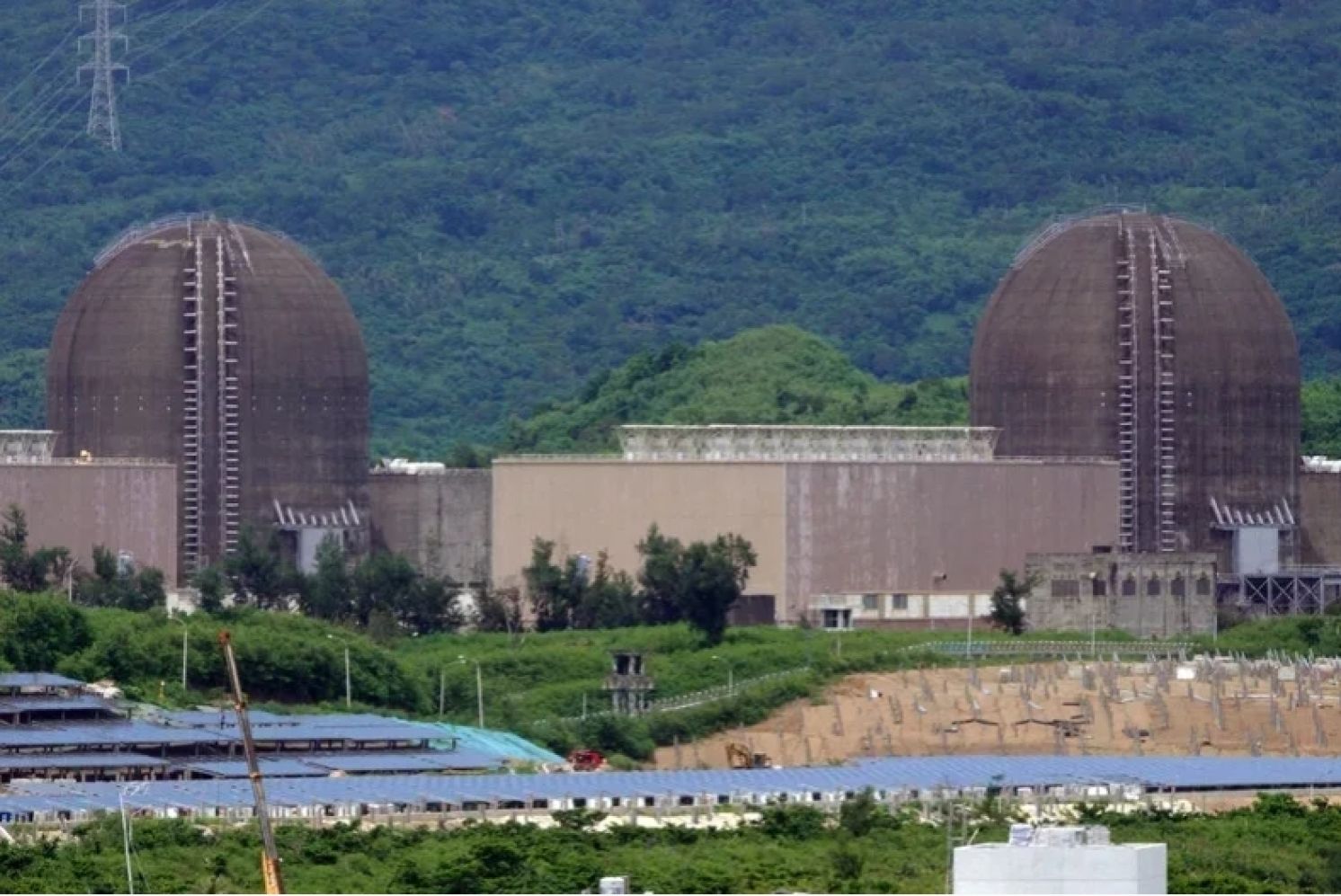
President Lai Ching-te recently announced that Nuclear Power Plants No. 2 and No. 3 are ready for potential restart. This decision not only concerns Taiwan’s national energy structure and power supply stability, but also involves competition among foreign business interests in Taiwan’s energy market. Energy policy resembles a massive iceberg: what surfaces are conflicting energy pathways, while beneath lies extensive domestic and international commercial competition. As the Democratic Progressive Party (DPP) shifts its energy trajectory—even overturning its long-held anti-nuclear stance—the result will be a reshuffling of the political–business landscape.
During the administration of former President Tsai Ing-wen, green energy was strongly promoted, with European offshore wind developers becoming the primary beneficiaries. Now, the Lai administration has announced expanded procurement of American natural gas and is evaluating the restart of nuclear power plants. This move could reverse the prior “pro-Europe, less U.S.” energy orientation, opening the door for American companies to claim a share.
To achieve the “2025 nuclear-free homeland” goal, the Tsai administration aggressively supported green energy to replace nuclear power. Major offshore wind developers were almost exclusively European, including Ørsted, Copenhagen Infrastructure Partners, Corio, and wpd. In contrast, American companies could “see the opportunity but not access it.”
A review of annual position papers from the European Chamber of Commerce shows a focus on offshore wind issues such as development progress, localization disputes, and financing support. Meanwhile, the American Chamber of Commerce has repeatedly raised concerns over Taiwan’s power supply stability in its white papers, questioning the pace of renewable energy development and encouraging Taiwan to consider “more energy options.” This effectively serves as an indirect reminder of the drawbacks of a non-nuclear policy and the overlooked American business interests.
Director Raymond Greene of the American Institute in Taiwan (AIT) has openly stated that the United States is currently the world’s largest energy exporter, offering a wide range of energy solutions unmatched globally—from traditional fossil fuels such as liquefied natural gas (LNG) to emerging green technologies like geothermal power and fuel cells. Whatever Taiwan’s needs, the United States can provide solutions. In terms of nuclear energy, the United States is prepared to assist in introducing both existing and emerging technologies, such as small modular reactors (SMRs), and is willing to help Taiwan address nuclear waste storage challenges.
Now, signs of “Tsai’s rules not followed by Lai” are emerging in energy policy. American companies are no longer absent from Taiwan’s energy market. Taipower, in planning to restart Nuclear Power Plant No. 3, has turned to American-based Westinghouse. For Nuclear Power Plant No. 2, Taipower has initiated independent safety reviews in partnership with General Electric. These arrangements, currently in early stages and publicly disclosed by the Ministry of Economic Affairs, represent only the beginning; for Westinghouse and GE, the more substantial opportunities lie in post-restart operations.
In addition, under the U.S.–Taiwan Agreement on Reciprocal Trade (ART) signed by Vice Premier Cheng Li-chun, Taiwan has pledged not to purchase nuclear reactors, fuel rods, or enriched uranium from countries that raise national security concerns. This “tied procurement clause” not only signals the direction of future nuclear restart plans but also effectively secures market access for U.S. nuclear energy firms.
Beyond nuclear energy, the ART also commits Taiwan to procure $44.4 billion worth of U.S. liquefied natural gas and crude oil from 2025 to 2029, along with $25.2 billion in power and grid-related equipment.
Taichung Mayor Lu Shiow-yen recently revealed that the United States is concerned about Taiwan’s insufficient power supply as a national security issue, and that President Lai likely has access to even more comprehensive information. In light of the Lai administration’s recent actions, the underlying reality speaks for itself.